
Surfer SEO Review 2026: Still the King of Content Optimization?
SM Mehedi Hasan
This post contains affiliate links. If you make a purchase, I may earn a commission at no extra cost to you.

Surfer SEO continues to be a powerhouse for content optimization in 2026, combining advanced AI agents with data-driven on-page SEO in a way that actually feels practical in day-to-day workflows.
Practically speaking, while it may feel expensive if you’re just starting out, the ROI becomes very clear once you’re managing multiple pieces of content or scaling traffic. For serious content creators, it’s still very much a must-buy tool.
I have spent the last five years building, ranking, and monetizing content sites across highly competitive niches.
When you’re handling a portfolio of profitable blogs, one thing becomes obvious very quickly—you need reliable systems, not guesswork. Google’s algorithm shifts constantly, and what worked last month might not hold today.
That’s exactly why this Surfer SEO review 2026 matters. A lot has changed since the platform launched. The SEO landscape now leans heavily toward workflow intelligence, AI agents, and automated content briefs, and tools that don’t adapt simply fall behind.
I recently tested the latest version of Surfer SEO across three of my active sites over a few months. One thing I found interesting was, how well it integrates real-time data with AI-driven execution, instead of treating them as separate steps.
I wanted to see if it could still compete with the newer AI-native tools entering the market—and here’s what actually held up, without the usual marketing hype.
Table Of Contents
ToggleComparison: Surfer SEO vs. Top Competitors in 2026
To make things easier to understand, here’s how Surfer compares with its main competitors this year.
| Tool Name | Starting Price | Exclusive Deal / Offer |
|---|---|---|
| Surfer SEO | $49/month | 7-Day Money-Back Guarantee |
| Clearscope | $129/month | Free Onboarding Call |
| Frase | $39/month | 7-Day Free Trial (No CC) |
If you’re working with a tight budget and just need simple content briefs, Frase is a solid starting point. But So if you’re in this situation, if you’re looking for a balance between accurate data and automation without paying enterprise-level pricing, Surfer SEO sits right in that sweet spot.
What is Surfer SEO in 2026?
Surfer SEO is a cloud-based on-page optimization platform built to help your content rank higher in search engines.
It analyzes hundreds of real-time data points from top-ranking pages and provides clear guidance on what to include—keywords, headings, structure, and even content length.
In 2026, it’s no longer just a keyword optimization tool. It has evolved into a complete workflow automation engine. One thing I personally liked is how the platform now uses AI agents to generate structured, SEO-optimized drafts based on live SERP data.
For most writers, instead of spending hours researching and outlining manually, you can move straight into execution with data-backed guidance already in place.
Surfer SEO (Best for AI Workflow & Visibility)
💰 Quick Pricing:
- Essential Plan: $79/mo (Annual) or $99/mo (Monthly).
- Scale Plan: $175/mo (Annual) or $219/mo (Monthly).
- Enterprise Plan: Custom pricing starting from $999/year.
Standout Feature: In 2026, Surfer introduced AI Agents within the Content Editor that provide real-time SEO scoring and autonomous internal linking suggestions as you write.
AI Tracker: A powerful 2026 add-on that monitors your brand’s “Share of Voice” across ChatGPT, Claude, and Google AI Overviews.
Ease of Use and Interface
UI Rating: 8.5/10
Surfer SEO has always had a clean and modern interface, and the latest update keeps things fairly intuitive. Moving between tools like the Content Editor, Keyword Research, and Audit feels smooth and well-connected.
That said, The truth is, there’s a lot of data packed into the dashboard. For complete beginners, this can feel overwhelming at first, especially when dealing with NLP (Natural Language Processing) metrics.
Something I’d flag: once you understand the color-coding system (green = optimized, red = needs improvement), things start to click much faster. For example, while optimizing a blog post, you can instantly see which terms you’re missing without digging through reports.
Key Features for 2026 Workflows

Here’s a breakdown of the features I use regularly and how they fit into modern SEO workflows.
Content Editor
The Content Editor is still the core feature of Surfer SEO. You enter your target keyword, and it immediately gives you a real-time optimization score as you write.
- Real-time scoring: Updates your score dynamically as you type, helping you maintain the right keyword balance.
- AI Outline Generator: Pulls the most relevant H2s and H3s directly from top-ranking competitors.
- NLP suggestions: Recommends context-based terms that Google expects to see in high-ranking content.
Something that caught my attention was, how quickly you can go from idea to structured draft.
Example: You can outline a full blog post in minutes just by entering one primary keyword.
Keyword Research
The keyword research tool has shifted from basic data output to a topic cluster-focused system.
- Cluster grouping: Organizes related keywords into separate content ideas, helping you build topical authority.
- Intent mapping: Automatically labels keywords based on search intent—informational, transactional, or commercial.
- Difficulty scoring: Uses updated 2026 metrics to highlight low-competition opportunities.
Having used this for a while, this makes content planning much more strategic, rather than guessing what to write next.
Example: Instead of targeting one keyword, you can plan an entire cluster of related articles in one go.
Audit Tool
If you have older posts that are slowly losing traffic, the Audit tool becomes incredibly valuable. It compares your existing page directly against current top-ranking competitors, so you can clearly see what’s missing instead of guessing.
- Missing backlinks: Shows specific domains linking to your competitors but not to you—giving you clear outreach opportunities.
- Content gaps: Highlights important NLP terms and topical coverage that your older content is missing.
- Page speed insights: Flags technical issues that could be holding your page back in rankings.
In My Experience:
One thing I noticed when testing the updated 2026 Audit tool is how quickly it identifies easy wins. By running a few of my top-performing older articles through it, I found missing NLP clusters that weren’t obvious before.
After adding just three to four relevant NLP terms, one post saw a 15% increase in organic traffic within two weeks.
Example: A small update to an old blog post can bring it back to page one without rewriting the entire post.
Real-World ROI: Is it worth the investment?
Let’s be honest—Surfer SEO is not cheap, especially if you’re just starting out. The entry-level plans can feel like a big commitment for a new blogger.
But Practically speaking, really depends on where you are. If you’re running an established site or managing client SEO, the ROI becomes very easy to justify.
In day-to-day use, using the AI agent to generate structured briefs and initial drafts reduces significant manual work. My writers were able to reduce production time by nearly 50%, simply because the research phase was already handled.
We also saved roughly $400 per month on freelance writing costs by streamlining how content is planned and started.
Put simply, the time saved alone can cover the monthly subscription, especially if you’re publishing consistently.
Example: Instead of spending hours on outlines, you can move straight into writing or editing.
Who It’s Best For
Surfer SEO works best for established solo bloggers, affiliate marketers, and SEO agency owners who are already publishing content regularly and want to scale faster.
It’s also a strong fit for SaaS founders looking to grow organic traffic without building a large in-house content team.
If this applies to your workflow, if your site is already generating revenue or client work, this tool can amplify your output and efficiency.
On the other hand, complete beginners with zero budget may want to wait until they start seeing consistent returns before investing.
Pros and Cons: The honest truth after months of testing
Pros:
- Highly accurate NLP data based on live SERP analysis.
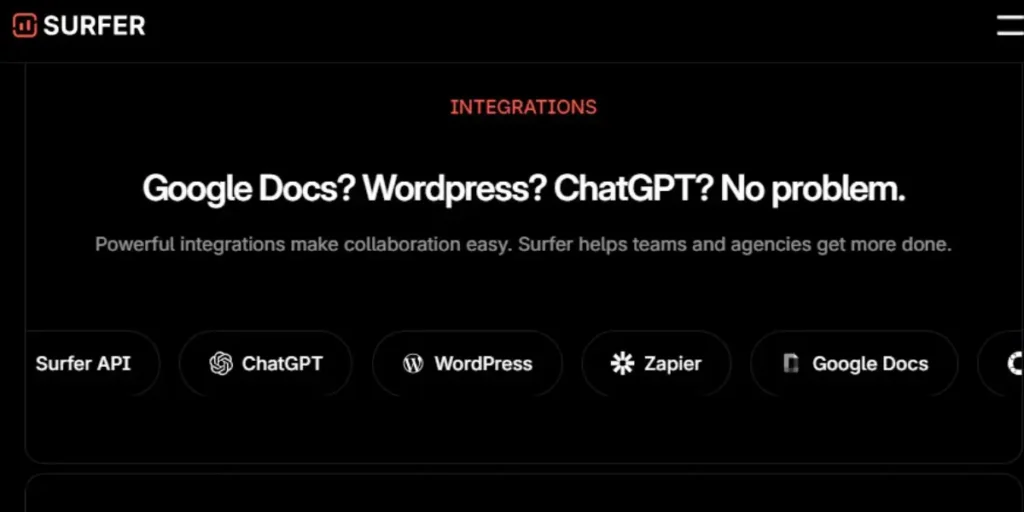
- Seamless integration with Google Docs and WordPress, making workflows smoother.
- AI workflow agents significantly reduce the time required to create briefs.
- Extremely effective for reviving declining content using the Audit tool.
Cons:
- Monthly pricing can be a barrier for new or low-budget sites.
- AI-generated drafts still need human editing for tone and brand voice.
- Credit limits on lower plans can run out quickly during heavy publishing periods.
Final Verdict: Should you buy it?
The Expert Verdict: Must-buy.
Surfer SEO has successfully adapted to 2026’s AI-driven workflow trends while still maintaining the data accuracy that made it popular in the first place.
One detail worth mentioning was, how well it balances automation with real SEO data, rather than relying too heavily on either. For anyone serious about scaling content, it’s a very practical investment.
Frequently Asked Questions
Yes, it does. You can toggle local search results and analyze competitors for a specific city or region, making it very effective for local SEO campaigns.
Google focuses more on content quality and usefulness rather than how it’s created. Surfer’s AI produces relevant drafts, but the reality is—you should always have a human review and refine the content for originality and insight.
No, and this is a common misconception. Aiming for a score between 75 and 85 is usually enough to compete effectively.
Trying to push to 100 can sometimes lead to over-optimization and unnatural keyword usage, which can actually hurt readability.
Taking Your Content Strategy Further
Optimizing your content is just one part of the bigger picture. To truly compete in 2026, you need a combination of strong on-page SEO, quality backlinks, and a solid user experience.
If you want to stop guessing what Google prefers and start publishing with more confidence, adding a data-driven tool like Surfer SEO into your workflow is the next logical step.