
Ahrefs Review 2026: Is It Worth the Premium Price?
By SM Mehedi Hasan
This post contains affiliate links. If you make a purchase, I may earn a commission at no extra cost to you.
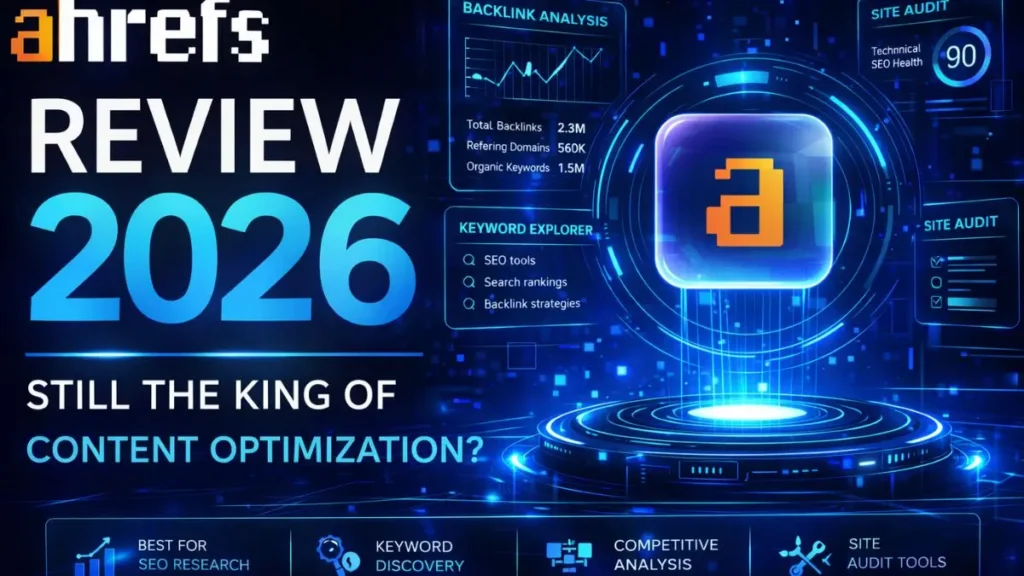
In 2026, Ahrefs remains the undisputed leader in backlink data and competitive analysis. The credit-based pricing can feel restrictive if you’re a heavy user; that’s true.
But So if you’re in this situation, is simple — the new AI workflow automations and workflow intelligence features can easily justify the ROI if you’re serious about building and scaling sites or running client campaigns.
I have spent the last six years building, scaling, and monetizing content sites. During that time, I’ve seen SEO tools rise, fall, and disappear.
Honestly, search has changed a lot. With AI overviews and zero-click SERPs becoming more common, you need tools that adapt fast and reduce manual work — not slow you down.
When working on this Ahrefs review 2026 update, I focused on cutting through the usual marketing claims. Instead of relying on feature lists, I logged into my agency dashboard to see how Ahrefs actually performs in real workflows today.
One thing I found interesting was, how much the platform has shifted toward automation and efficiency.
I will break down exactly how Ahrefs fits into a modern SEO workflow. You’ll see what works really well right now and which parts still feel frustrating even after years of consistent use.
Table Of Contents
ToggleAhrefs 2026 Pricing Overview
Before we get into the tools, it’s important to understand the pricing, as this directly impacts how you’ll use the platform day to day.
| Tool Name | Starting Price | Exclusive Deal / Offer |
|---|---|---|
| Ahrefs Lite | $129/month | Free Webmaster Tools |
| Ahrefs Standard | $249/month | 6-Month Data History |
| Ahrefs Advanced | $449/month | Free Looker Studio |
Ahrefs (SEO Authority)
💰 Quick Pricing:
- Lite: $129/mo (Standard) or $103/mo (Annual).
- Standard: $249/mo (Standard) or $199/mo (Annual).
Current Deal: Free Webmaster Tools for site owners or Save 20% on annual plans.
👉 Check Ahrefs Pricing & Plans
If you’re working solo, the Lite plan gives you enough data to uncover low-competition opportunities and start building traffic.
But if you’re running campaigns or handling multiple sites, you’ll hit limitations quickly. Growing teams should move straight to the Standard plan, since it unlocks the competitive intelligence features that actually drive client results.
Deep Dive: Ahrefs Review 2026 Core Features
The platform is huge, but After using it regularly, most SEOs spend nearly all their time inside three core dashboards.

Site Explorer
Site Explorer gives you a detailed breakdown of any website’s organic traffic and backlink profile. In 2026, this is one of the most important tools for reverse-engineering what’s working in your niche.
Ease of Use: 9/10. The interface is clean and easy to navigate. Beginners can quickly understand the main metrics, while more advanced users can dive deeper using filters and advanced reports.
Key Features & Use Cases:
- Competitor traffic estimation to understand niche potential
- Detailed backlink analysis to uncover link-building opportunities
- Historical data tracking to identify traffic drops after algorithm updates
One thing I personally liked is the “Top Pages” report. I use it to spot underperforming competitor content.
A quick example:
I found a competitor losing rankings due to an outdated article, updated the same topic on my site, and captured the featured snippet within a week.
Pricing & ROI: This is the core reason most people pay for Ahrefs. The backlink index is extremely reliable, and if you actively build links, the tool can easily pay for itself.
Who It’s Best For: Niche site builders, agency owners, and digital PR professionals.
Pros and Cons:
- Pros: The largest active backlink index available right now
- Cons: Traffic estimates can sometimes be lower than actual Google Analytics data
The Expert Verdict: Must-buy.
Keywords Explorer
This is one of the most powerful keyword research engines available right now. In 2026, it has evolved beyond basic keyword data and now includes AI-powered search intent classification and zero-click traffic estimates, which are critical in today’s search landscape.
Ease of Use: 8/10. The interface itself is easy to navigate. But the real value comes when you start using advanced inclusion and exclusion filters, and that takes a bit of practice to fully understand.
Key Features & Use Cases:
- Parent Topic grouping to organize and cluster related keywords efficiently
- Traffic Potential metric that shows the actual value of ranking (not just search volume)
- AI-assisted keyword clustering to speed up content planning
One thing I consistently rely on is ignoring the basic “Search Volume” metric.
Based on my experience, “Traffic Potential” gives a much clearer picture of how much traffic you can realistically capture, especially now that AI overviews are reducing clicks.
A quick example: A keyword with 1,000 searches might look small, but if the top page ranks for dozens of related terms, Traffic Potential reveals the real opportunity behind it.
Pricing & ROI: Excellent ROI. In practice, finding just one low-competition, high-intent keyword can easily cover your yearly subscription cost.
Who It’s Best For: Content strategists and affiliate marketers.
Pros and Cons:
- Pros: Extremely accurate keyword difficulty (KD) scores, which makes planning much more reliable
- Cons: Credits can drain quickly if you run large-scale or bulk keyword analyses
The Expert Verdict: Must-buy.
Content Explorer
Think of this as a mini search engine inside Ahrefs. It helps you discover top-performing content based on traffic, backlinks, and social shares across any topic.
Ease of Use: 7/10. The interface is simple, but getting the best results depends on how well you understand what to search for and how to filter it.
Key Features & Use Cases:
- Finding linkable assets by analyzing highly-linked content in your niche.
- Identifying unlinked brand mentions for quick outreach opportunities.
- Discovering low-DR websites generating high traffic, which signals easy ranking opportunities.
One thing I personally like is using very specific filters to uncover hidden opportunities.
A quick example: I often apply “Domain Rating < 30” and “Traffic > 1000” to find topics where weaker sites are already ranking — these are usually easy wins if you execute properly.
Pricing & ROI: High ROI, especially for content teams. It removes much of the guesswork when deciding what to publish next.
Who It’s Best For: Link builders and content managers.
Pros and Cons:
- Pros: Unmatched when it comes to finding proven content frameworks that already work
- Cons: Sometimes pulls in irrelevant or syndicated content, which needs manual filtering
The Expert Verdict: Wait for a sale (or use it strategically when on a paid plan).
Advanced Capabilities
UI Rating: 8.5/10
Surfer SEO has always had a clean and modern interface, and the latest update keeps things fairly intuitive. Moving between tools like the Content Editor, Keyword Research, and Audit feels smooth and well-connected.
That said, Put simply, there’s a lot of data packed into the dashboard. For complete beginners, this can feel overwhelming at first, especially when dealing with NLP (Natural Language Processing) metrics.
Something worth mentioning: once you understand the color-coding system (green = optimized, red = needs improvement), things start to click much faster. For example, while optimizing a blog post, you can instantly see which terms you’re missing without digging through reports.
Key Features for 2026 Workflows
Beyond research, you also need tools that help maintain and protect your existing sites — and this is where these features come in.
Site Audit
Site Audit is a cloud-based crawler that scans your website for technical SEO issues. In 2026, it goes a step further with workflow intelligence that automatically flags critical problems, making it easier to act fast.
Ease of Use: 8/10. The dashboard gives you a clear health score, and what stood out during testing was how each issue is explained in plain, beginner-friendly language.
Key Features & Use Cases:
- Automated weekly crawls to detect issues like broken links early
- Internal linking suggestions powered by AI-based topical mapping
- Core Web Vitals tracking is directly inside the dashboard.
Setting up automated crawls is one of those things that pays off quietly in the background.
A quick example: One of my sites had an “noindex” tag accidentally added, and the tool flagged it before rankings dropped — which saved a lot of potential traffic.
Pricing & ROI: Good overall value. That said, for very large enterprise sites, some technical SEOs may still prefer dedicated tools like Screaming Frog for deeper crawling control.
Who It’s Best For: Webmasters and technical SEO specialists.
Pros and Cons:
- Pros: Fully cloud-based, so it doesn’t use your system resources
- Cons: JavaScript rendering can slow down on larger websites
The Expert Verdict: Must-buy.
Rank Tracker
Rank Tracker is designed to monitor your keyword rankings across different locations and devices. In 2026, it will also include AI-driven alerts that notify you of sudden ranking changes or SERP volatility.
Ease of Use: 9/10. It’s very intuitive. You simply add your keywords, set your target locations, and let it run in the background.
Key Features & Use Cases:
- Share of Voice metric to measure your overall visibility in the market
- Competitor tracking to see who is gaining or losing rankings
- Automated alerts for major ranking shifts
One thing I personally find very useful is the “Share of Voice” metric.
For most writers, instead of tracking keywords individually, you get a big-picture view of how much of the market you actually own.
A quick example: It’s much easier to show clients overall growth using Share of Voice rather than explaining dozens of keyword movements.
Pricing & ROI: Moderate ROI. The tracking is accurate, but credit limits on keyword updates can become expensive if you’re managing large campaigns.
Who It’s Best For: Client-facing SEOs and niche site owners.
Pros and Cons:
- Pros: Clean, visual reports that are easy to present to clients
- Cons: Daily ranking updates cost extra on lower-tier plans
The Expert Verdict: Wait for a sale (or supplement with a cheaper rank tracker).
Making Your Buying Decision
Ahrefs has clearly evolved from being just a backlink checker into a full-scale workflow intelligence platform. And even now, the data quality is still among the best you’ll find in any SEO tool.
That said, the biggest friction point is still the usage-based pricing model. The truth is, you need to keep an eye on your credits, especially if you’re running multiple projects or doing heavy research. Otherwise, costs can stack up faster than expected.
But here’s what stood out during testing — the time savings from AI-driven content clustering and fast site auditing are significant.
Practically speaking, if you’re actively using the tool, the efficiency gains can easily outweigh the higher price tag.
Final Thoughts on Ahrefs
If you’re serious about building search traffic in 2026, Ahrefs is no longer optional — it’s a core part of the workflow.
The combination of Site Explorer and Keywords Explorer gives you a clear strategic edge, especially when you’re competing against people relying only on free tools.
Having used this for a while, having access to this level of data changes how you approach SEO entirely — you stop guessing and start making decisions based on actual opportunities.
If you’re just starting out, begin with the Lite plan. It’s enough to get traction and validate your strategy.
As your revenue grows, moving up to the Standard plan makes a lot more sense, especially when you need deeper competitive insights.
Frequently Asked Questions
Both are strong tools, no doubt.
But Ahrefs still leads in backlink data accuracy and overall user interface simplicity. Everything feels cleaner and easier to navigate.
On the other hand, Semrush tends to perform better for PPC data and localized SEO tracking, so your choice depends on your primary use case.
Yes, you can.
Ahrefs offers a free version called “Ahrefs Webmaster Tools (AWT)”, which gives you access to basic Site Audit and Site Explorer features for your own verified websites.
What this means for you is — it’s a good starting point, but if you want competitor insights and full keyword research, you’ll need a paid plan.
Yes—and this is where the platform has improved significantly recently.
In 2026, Ahrefs integrates AI across multiple areas, including:
- Search intent analysis
- Content clustering
- Automated technical SEO alerts
From what I’ve seen, these features aren’t just gimmicks — they actually reduce manual work and speed up execution, which is exactly what modern SEO workflows need.