
Semrush Review 2026: Is It Still the Best All-in-One SEO Suite?
By SM Mehedi Hasan
This post contains affiliate links. If you make a purchase, I may earn a commission at no extra cost to you.
Semrush remains the undisputed heavyweight champion of SEO software in 2026. What really sets it apart is its deep competitive intelligence, AI-driven content workflows, and continuously updated data.
In practice, if you are serious about building and scaling sites, the ROI here is hard to ignore. Yes, it’s on the expensive side—but the time you save with its automated insights can easily justify the monthly cost, especially if you’re growing a brand or managing multiple projects.
I’ve spent the last six years building, scaling, and monetising content sites across highly competitive niches. Over time, my tech stack has changed a lot—but Semrush is one of those tools that never left my bookmarks bar.
When you’re managing multiple websites, you need reliable data to make fast, confident decisions. Guesswork just doesn’t cut it anymore—you need to know what your competitors are doing and which keywords will actually bring in revenue.
That’s exactly why I put together this Semrush review for 2026. The platform has rolled out some major updates recently, especially around AI agents and workflow automation.
What I wanted to figure out was simple: do these new features actually help in real-world publishing, or are they just hype? Let’s break it down and see how Semrush performs today.
Table Of Contents
ToggleSemrush vs. The Competition in 2026
Before jumping into individual features, it helps to understand where Semrush stands in the overall SEO tool landscape. Here’s a quick comparison with its main competitors:
| Tool Name & Focus | Starting Price (Monthly/Annual) | Exclusive Deal / Offer |
|---|---|---|
|
Semrush All-in-one Marketing |
$139.95/mo ($117.33/mo Billed Annually) |
👉 Start Trial (Semrush One) |
|
Ahrefs Backlink Analysis |
$129/mo ($107.50/mo Billed Annually) |
👉 View Plans (Brand Radar AI) |
|
Moz Pro Local SEO & Beginners |
$49/mo ($39/mo Billed Annually) |
👉 Try Free (Basic Insights) |
💰 Quick Pricing For Semrush (The Marketing Powerhouse)
- Pro Plan: $117.33/mo (Annual) or $139.95/mo (Monthly).
- Guru Plan: $208.33/mo (Annual) or $249.95/mo (Monthly).
- 2026 Update: Now includes Semrush Copilot (AI) and city-level rank tracking.
- 👉 Start Your 7-Day Free Trial
If you’re working with a tight budget and your main focus is link building, then Ahrefs is still a solid option.
💰 Quick Pricing: Ahrefs (The Backlink King)
- Lite Plan: $107.50/mo (Annual) or $129/mo (Monthly).
- Standard Plan: $199/mo (Annual) or $249/mo (Monthly).
- 2026 Update: Includes Brand Radar AI and the new Starter ($29/mo) plan for beginners.
- 👉 Check Ahrefs Latest Plans
But So if you’re in this situation, if you want a tool that acts like a complete SEO command centre, handling keyword research, content planning, and competitor analysis in one place, then Semrush clearly comes out ahead.
UI & Ease of Use: Navigating the 2026 Dashboard
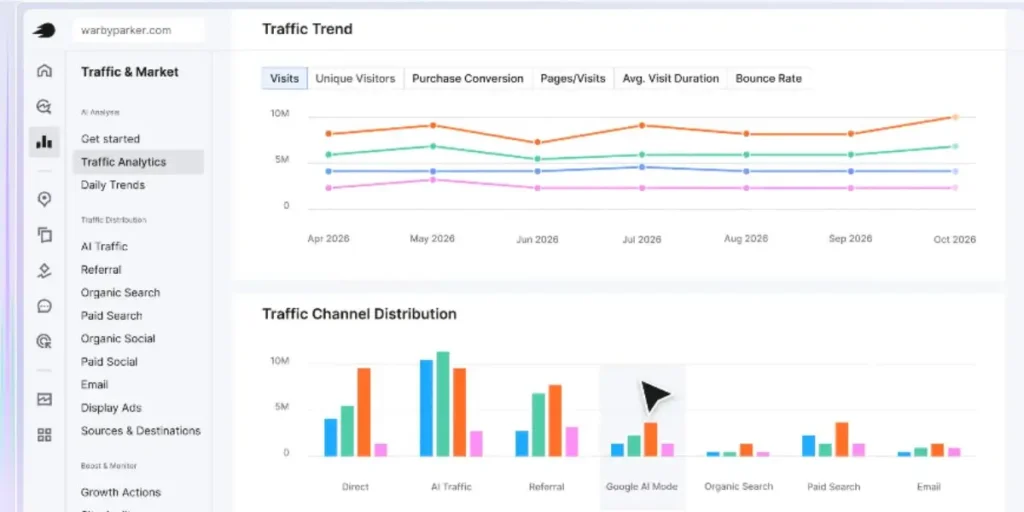
Semrush is a powerful platform with 50+ tools built into a single dashboard. In the past, this made things feel a bit overwhelming, especially for beginners.
The good news is that the 2026 dashboard update has made things much more user-friendly. You can now pin your most-used tools directly to the sidebar, and the AI-assisted setup guides help you launch campaigns without confusion.
For example, you can pin Keyword Magic Tool + Site Audit so you don’t have to dig through menus every time.
Ease of Use Rating: 8/10
There’s still a bit of a learning curve—mainly because of how much data is available. But overall, the interface now feels cleaner, faster, and far more intuitive than before.
Core Feature Deep Dive
Let’s break down the tools you’ll actually use day-to-day to grow your traffic and revenue.
Keyword Research (Keyword Magic Tool)
Brief Overview:
The Keyword Magic Tool pulls data from a massive keyword database (billions of terms) to help you find profitable opportunities. In 2026, it goes a step further by integrating search intent and AI-based ranking difficulty predictions tailored to your domain.
Ease of Use:
9/10. It’s very straightforward—you enter a seed keyword, and within seconds, you get thousands of organised keyword ideas.
Key Features & Use Cases:
- Intent filtering (Navigational, Informational, Commercial, Transactional)
- Topical clustering to build strong content hubs
- Advanced filters for finding low-competition, high-volume long-tail keywords
One pattern I noticed was, how effective the filters are when used strategically. I usually set the intent to “Commercial” and keep Keyword Difficulty (KD) below 30.
This combination consistently uncovers bottom-of-the-funnel keywords that are not only easier to rank for but also convert much better.
Pricing & ROI:
Here’s the thing, manually clustering keywords takes hours. This tool cuts that down dramatically. So even if you’re just using this feature properly, it already covers a big chunk of the Pro plan’s cost through time savings alone.
Who It’s Best For:
- Solo bloggers are trying to grow their affiliate income.
- Niche site builders targeting low-competition keywords.
- Agency strategists are planning structured 3–6 month content calendars.
Pros and Cons:
Pros:
- Huge keyword database
- Very accurate search volume data
- Excellent clustering for topical authority
Cons:
- Mobile data requires a higher-tier plan.
The Expert Verdict:
Must-buy. This is the foundation of any SEO strategy, and honestly, it’s one of the main reasons people stick with Semrush long-term.
Backlink Audit and Link Building
Brief Overview:
This toolkit helps you monitor your own backlink profile while also breaking down your competitors’ link-building strategies. In the 2026 update, Semrush added automated outreach tracking and improved toxic link detection, streamlining the entire process.
Ease of Use:
7/10. There is a bit of a learning curve here because link metrics aren’t always beginner-friendly. That said, once you set things up, the audit process itself runs automatically, which saves a lot of manual work.
Key Features & Use Cases:
- Toxicity Score to quickly identify harmful backlinks pointing to your site
- Link Intersect tool to find domains linking to your competitors but not you
- Built-in CRM for managing outreach emails directly inside the platform
One thing I personally liked is… how powerful the Link Intersect tool is in real scenarios. If a website is already linking to two or three of your competitors, there’s a very high chance they’ll link to you as well—if your content is better.
For example, you can instantly find blogs linking to competing “best tools” lists and pitch your updated version.
Pricing & ROI:
If you’re running a link-building service or boutique agency, this feature alone can replace multiple tools (outreach, tracking, and analysis).
For most writers, instead of paying for 2–3 separate subscriptions, you manage everything in one place, which significantly improves ROI over time.
Who It’s Best For:
- SEO managers handling authority growth campaigns
- Digital PR professionals doing outreach at scale
- Site owners recovering from Google penalties who need to clean up toxic links
Pros and Cons:
Pros:
- Highly reliable toxic link detection
- All-in-one outreach workflow (no extra tools needed)
Cons:
- The backlink database can be slightly smaller than Ahrefs in some international markets.
The Expert Verdict:
Must-buy. This is critical for both protecting your site and scaling authority safely, especially in competitive niches.
AI-Driven Content Marketing Toolkit
Brief Overview:
This toolkit combines topic research with a real-time AI writing assistant that guides your content as you create it. It analyses the top 10 ranking pages on Google and shows you exactly what you need—entities, word count, headings, and structure—to compete effectively.
Ease of Use:
9/10. The interface feels very similar to Google Docs, so most writers and editors can start using it immediately without any friction.
Key Features & Use Cases:
- SEO Content Template that generates a data-backed brief based on live SERP results
- Real-time SEO scoring that evaluates your content as you write
- AI agents for generating outlines, meta descriptions, and FAQ sections instantly
Something worth mentioning: this completely changes how you manage writers. Instead of sending vague instructions, you can just share the SEO template and set a required score (like 8/10) before submission.
For example, a writer can follow the template and hit optimisation targets without constant back-and-forth.
Pricing & ROI:
This feature is part of the Guru plan, so yes—it’s a price increase.
But here’s the reality: if you’re publishing 4+ articles per month, the time saved on briefing, editing, and revisions easily offsets the extra cost.
Who It’s Best For:
- Content marketing teams manage multiple writers.
- SaaS founders building organic acquisition channels
- High-volume niche site operators scaling content production
Pros and Cons:
Pros:
- Eliminates guesswork from on-page SEO
- Smooth integration with writing workflows (Google Docs-style interface)
Cons:
- Full functionality requires the higher-tier Guru plan.
The Expert Verdict:
Must-buy. It connects SEO data directly with content creation, which is exactly what most tools fail to do.
Competitive Intelligence: Winning with Market Explorer
You cannot operate in a vacuum in 2026. If you want to grow, you need a clear understanding of where your competitors are getting their traffic and what’s actually working for them.
The Market Explorer tool gives you a complete bird’s-eye view of your niche. It automatically groups websites into categories such as Leaders, Established Players, Game Changers, and Niche Players, making competitive analysis much easier to interpret.
After spending time with it, how useful the “Game Changers” category is. These are sites that are growing fast but aren’t yet saturated, creating a perfect opportunity.
I usually look at their top-performing pages to understand which topics they’re targeting early—before those keywords become highly competitive.
For example, you can spot a rising blog covering new SaaS tools and publish a better version before the keyword gets crowded.
What I found is, this is one of the smartest ways to stay ahead of trends and capture traffic early, rather than compete when it’s already too late.
Real-World ROI: Making Sense of the Pricing
Semrush pricing is often the biggest hesitation point, especially for beginners. At $139.95/month for the Pro plan, it’s definitely not an impulse purchase.
But you need to look at this from a business ROI perspective, not just cost.
Here’s a simple way to think about it: If Semrush helps you find just one keyword that generates $300/month in affiliate revenue, you’ve already paid for the tool twice over.
Practically speaking, the value isn’t in using every feature—it’s in finding even a few high-impact opportunities that generate consistent returns.
For agencies and larger teams, the Guru ($249.95/mo) and Business ($499.95/mo) plans combine keyword tracking, content optimisation, and reporting into one system.
If you tried to replace all of that with separate tools, you’d end up paying significantly more overall—plus dealing with workflow inefficiencies.
A No-Fluff Look at the Pros and Cons
Every tool has trade-offs. Here’s a straightforward breakdown of where Semrush delivers and where it still has room to improve.
What we love:
- Massive volume of accurate, actionable data that you can actually use.
- AI content workflows that save real time on briefing and editing.
- Competitor intelligence tools that give you an edge in competitive niches.
- Powerful site audit features that instantly flag technical SEO issues.
What needs improvement:
- Pricing can be a barrier for beginners and hobby bloggers.
- Traffic data for very new sites isn’t always fully reliable.
- Too many tools can be distracting if you don’t follow a focused workflow.
The Final Word on Semrush for Modern Publishers
So, is Semrush still the gold standard for SEO in 2026?
Yes—without a doubt.
What’s changed is how the platform works. It’s no longer just a data provider—it’s now more of an intelligent workflow assistant.
Instead of just showing numbers, it tells you what actions to take and where to focus, which is what actually drives growth.
If you’re a solo blogger just starting out, it might make sense to wait for a discount or start with free tools until you have a budget.
But if you’re treating your site like a serious business, then Semrush becomes a high-leverage investment—one that can pay for itself many times over through better decisions and faster execution.
Frequently Asked Questions
Both are excellent tools, but they serve slightly different purposes.
Semrush is stronger for all-in-one marketing, content optimisation, and competitor analysis, while Ahrefs is often preferred for deep backlink analysis.
Yes, Semrush offers a limited free plan that allows a small number of daily searches.
It’s useful for testing the interface and basic features, but the reality is—you’ll hit limits quickly if you’re doing serious keyword research or competitor analysis.
No, you don’t.
The Pro plan is more than enough for solo bloggers and small site owners. You only need the Guru plan if you require:
- Historical data
- Full Content Marketing Toolkit access
- Management of multiple advanced projects