How Does OpenAI Make Money? (2026 Revenue Breakdown)
By SM Mehedi Hasan
OpenAI makes most of its money from ChatGPT subscriptions, which bring in roughly 70% of revenue, with the rest coming from API usage, enterprise contracts, and a new advertising program launched in 2026. The company crossed an estimated $20 billion annual run rate this year, yet it still loses billions every quarter.
Table Of Contents
ToggleHow Does OpenAI Make Money in 2026?
OpenAI makes money through four main channels: paid ChatGPT subscriptions, pay-as-you-go API access, enterprise and Microsoft licensing deals, and a brand-new ads business.
Subscriptions do the heavy lifting here, pulling in around 70 cents of every dollar the company earns. That number surprised me the first time I saw it broken down. Most people assume a company this famous must earn from a dozen exotic sources, but the truth is simpler.
A few million people paying $20 a month, plus a fast-growing pile of business accounts, is the engine.
Here is the quick mix so you can see the shape of the business before we go deeper.
| Revenue stream | Approx. share | What it is |
|---|---|---|
| ChatGPT subscriptions | ~70% | Plus, Go, Pro, Team, Enterprise plans |
| API and licensing | ~25% | Developers paying per token to build apps |
| Sora, ads, and other | ~5% | Video product, new ad units, smaller deals |
These splits come from Value Add VC and Sacra reporting in 2026 and closely align with what OpenAI has publicly hinted at. Keep in mind OpenAI is still private, so every figure here is a best estimate, not an audited number.
What Are OpenAI’s Main Revenue Streams?
OpenAI earns from five distinct streams, each targeting a different customer type. Some pay a flat monthly fee, others pay per token, and a new group of advertisers now pays to reach free users. Let me walk through each one the way I’d explain it to a friend who just wants to know where the cash actually comes from.
How much does OpenAI earn from ChatGPT subscriptions?
ChatGPT subscriptions are the single biggest source, generating roughly 70% of total revenue across consumer and business plans. This is the part of the business almost everyone interacts with, even if they never pay a cent.
The lineup has grown significantly since the early days, when $20 a month was the only paid option. Now there is a full ladder, from a cheap entry plan to a premium power-user tier.
| Plan | Price (US list) | Built for |
|---|---|---|
| ChatGPT Go | $8/month | Casual users wanting fewer limits |
| ChatGPT Plus | $20/month | Individuals and creators |
| ChatGPT Pro | $200/month | Power users, researchers, heavy workloads |
| ChatGPT Team | ~$25 to $30 per user/month | Small businesses and squads |
| ChatGPT Enterprise | Custom (roughly $60/seat) | Large organizations |
But the real story is volume. ChatGPT reached around 700 million weekly active users by mid-2026, and yet only about 20 million of them pay. That is a conversion rate near 3%, which sounds tiny until you multiply 20 million seats by $20-plus a month.
Here is something most articles skip. OpenAI launched ChatGPT Go at $8, partly to capture price-sensitive markets, first in India and then worldwide. Cheaper plans in price-sensitive regions widen the funnel, and a wider funnel feeds the whole revenue model.
Pro Tip: When you read a headline about OpenAI’s user count, check whether it says “weekly active” or “paying.”
The gap between the two, hundreds of millions of free users versus around 20 million payers, is the exact problem the ads program is trying to solve.
How does OpenAI make money from its API?
The API earns roughly 25% of revenue by charging developers a small fee for every chunk of text a model processes. This is the quiet workhorse of the business, and it scales automatically as more apps get built.
Pricing is based on tokens, with about 1,000 tokens roughly equal to 750 words. You pay for the words you send in and the words the model generates back, so a chatty app costs more than a simple one.
Honestly, I expected the API to be a bigger slice than it is. So many startups run on OpenAI’s models that you’d think it would rival subscriptions, but consumer ChatGPT simply dwarfs it on raw dollars.
There’s a second layer here, too. OpenAI offers fine-tuning, where a company pays extra to train a model on its own data. That premium service matters most in specialized fields like medicine, law, and engineering, where a generic model just won’t cut it.
And there’s a risk worth naming. A price war with rivals like Anthropic could force OpenAI to cut token prices, squeezing already-thin margins on this stream. So API revenue is growing, but it is not a comfortable, protected cash cow.
What does OpenAI earn from its Microsoft partnership?
The Microsoft relationship cuts both ways: it brings in licensing revenue but also costs OpenAI a large share of its income. Microsoft invested around $13 billion over the years and hosts OpenAI’s models on Azure.
Most coverage treats this deal as pure upside for OpenAI. The picture is more tangled than that. Under terms renegotiated in October 2025, OpenAI agreed to pay Microsoft 20% of its revenue through 2032, according to Sacra’s reporting.
So Microsoft is both a customer and a tollbooth. It resells OpenAI’s models through the Azure OpenAI Service to enterprises, which generates licensing income for OpenAI. But that 20% cut means a fifth of the top line flows straight back to Redmond.
Compared to a normal cloud vendor relationship, this one is unusually deep. The revised 2025 terms also removed Microsoft’s right of first refusal on new cloud workloads, which freed OpenAI to sign massive deals with Amazon and Oracle. That shift tells you OpenAI wants to depend on Microsoft less, not more.
Are ads now a revenue stream for OpenAI?
Yes, OpenAI began testing ads inside ChatGPT in February 2026, and they appear only on the Free and $8 Go tiers in the US. Paid plans like Plus, Pro, Business, and Enterprise stay completely ad-free.
This was a genuine philosophy shift. Sam Altman once called mixing AI and advertising “uniquely unsettling” back in 2024, and treated ads as a last resort. The math eventually won the argument, because only about 5% of users pay, while infrastructure bills keep climbing.
Here is how the ads actually work, since few explainers get into the mechanics:
- Ads show at the bottom of an answer when a relevant sponsored product or service matches your conversation.
- They are clearly labeled as sponsored and visually separated from the organic reply.
- OpenAI says ads never influence the model’s actual answer.
- No ads appear for users under 18 or near sensitive topics like health, mental health, or politics.
- Microsoft Advertising handles the ad sales through its existing Bing infrastructure.
The early pricing was steep. Reports pointed to a $60 CPM and a $200,000 minimum spend at launch, which made it an enterprise-only play at first. Some ad networks have since slashed their minimums to attract more advertisers.
If you run a business or a blog, this matters because it signals where AI traffic is heading. The moment a 700-million-user assistant starts serving sponsored answers, the entire discovery layer of the web begins shifting.
Do Sora and licensing add to revenue?
Sora and other licensing deals make up the smallest slice, roughly 5% of revenue, but they point to where OpenAI wants to grow next. Sora is OpenAI’s short-form AI video product, and it briefly attracted big media interest.
One vivid example: Disney announced a $1 billion investment in OpenAI in December 2025 and signed a licensing deal that lets users generate videos featuring hundreds of Disney, Marvel, Star Wars, and Pixar characters.
Disney later exited that deal in March 2026, after Sora was discontinued, showing how quickly these experimental lines can rise and fall. So this bucket is real money, but it is volatile. Treat it as the experimental wing of the business rather than a stable pillar.
What Is OpenAI’s Business Model?
OpenAI runs a hybrid model: a freemium consumer product on top, a usage-based developer platform underneath, and a for-profit company now occupying the space once occupied by a non-profit.
The structure has changed more than once. It started in 2015 as a non-profit research lab. In 2019, it adopted a “capped-profit” structure, enabling it to raise venture capital while limiting investors’ returns.
Then, in 2025, it restructured again into a for-profit public benefit corporation, clearing the path to raise huge sums and eventually go public.
The platform logic is what gives the business leverage. Free users improve the models through feedback and word of mouth. Some convert to paid plans.
Developers build on the API, which spreads OpenAI’s models into thousands of other products. Each layer feeds the next.
In My Experience
After tracking OpenAI’s numbers and using the paid tiers for over a year, the thing that surprised me most was how quietly the business shifted under everyone’s feet.
I paid for Plus mainly for faster responses, never thinking about where my $20 actually went.
When the ads rollout hit in early 2026, I finally saw the strategy click into place. On a free account, the sponsored block sat right at the bottom of an answer on mobile, and it ate up a noticeable chunk of a small screen.
It didn’t change the answer, but it absolutely changed the feel. What caught me off guard was the gap between perception and reality. Friends assumed OpenAI was swimming in profit because ChatGPT is everywhere.
The actual financials tell a story of enormous revenue and even more enormous spending. Using the product daily, you’d never guess the company behind it loses billions.
One limitation I kept bumping into: because OpenAI is private, you can’t fully verify any single figure.
You triangulate between Sacra, Value Add VC, The Information’s leaks, and OpenAI’s own posts, and you settle on a range rather than a clean number. That uncertainty is part of the honest answer here.
How Much Revenue Does OpenAI Make?
OpenAI reached an estimated $20 billion annualized revenue run rate by mid-2026, with some research firms putting the figure closer to $25 billion. That is a steep climb from $3.7 billion in 2024 to roughly $13 billion at the end of 2025.
The growth curve is genuinely rare. Few companies in history have scaled revenue this fast. Here is the trajectory laid out plainly.
| Period | Estimated revenue | Notes |
|---|---|---|
| 2024 | ~$3.7 billion | Early monetization phase |
| End of 2025 | ~$13 billion | Subscription and enterprise surge |
| Mid-2026 | ~$20 billion annualized | About $4 billion per month |
| Feb 2026 (Sacra) | ~$25 billion annualized | Higher-end estimate |
Now for the non-obvious insight that trips up almost everyone. A lot of headlines quote “annualized recurring revenue” (ARR), which simply multiplies a single strong month by 12.
As critics have pointed out, that figure can overstate what a company has actually earned because it ignores churn and assumes every month is as good as the best one.
So when you see “$25 billion,” read it as a run rate, not money in the bank. The real cash collected over a full year is lower. This single distinction separates careful analysis from hype, and most competing articles never mention it.
Is OpenAI Actually Profitable?
No, OpenAI is not profitable, and it is not close to being profitable yet.
The company is projected to lose around $14 billion in 2026, with cumulative losses forecast at nearly $115 billion through 2029, according to internal documents reported in early 2026.
This is the part the glossy coverage tends to soften. Massive revenue and massive losses are happening at the same time.
Sacra pegged OpenAI’s gross margin at about 33%, which is thin for a software company, and it is held down by enormous inference costs.
Those compute costs are the anchor. Inference spending reached an estimated $8.4 billion in 2025 and is projected to climb to $14.1 billion in 2026.
Every answer ChatGPT generates costs real money in GPU time, so more users can actually mean bigger losses, not smaller ones.
Most analysts expect OpenAI to reach cash-flow positive territory around 2030, not before. So the honest answer to “is it profitable” is that profitability is a bet on the future, funded today by investors willing to wait.
Why Is a Money-Losing Company Worth $850 Billion?
OpenAI is worth so much because investors are betting on where the revenue curve goes, not where it sits today.
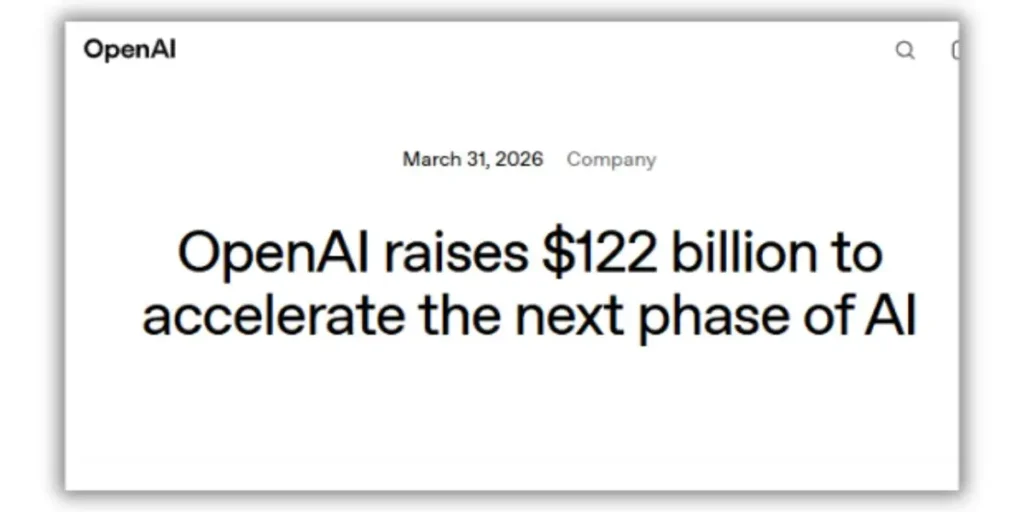
In March 2026, the company closed a funding round of roughly $122 billion at an $852 billion post-money valuation, one of the largest private fundraises ever.
Think of it like early streaming or early cloud. Netflix burned cash for years before the model paid off.
Investors here are paying for a possible future where AI agents handle real work, and OpenAI captures a slice of the value they create.
The whole bet comes down to two competing curves. If revenue scales faster than compute commitments, OpenAI becomes a trillion-dollar business. If compute costs outrun revenue, the losses never close.
Nobody outside the company has the data to know for certain which curve wins, which is exactly why the valuation is so contested.
There’s a fresh wrinkle, too. OpenAI confirmed on June 8, 2026, that it filed for an IPO with the SEC, though it gave no firm timeline.
An IPO would let public investors buy in, and it would finally force more financial transparency onto a company that has guarded its numbers closely.
Pro Tip: A sky-high valuation is a forecast, not a scoreboard. When you read that OpenAI is “worth” $852 billion, that reflects what investors will pay for a stake based on future expectations, not the profit the company has banked.
Where Does OpenAI’s Money Actually Go?
OpenAI’s money flows almost entirely into compute: training new models and running them for hundreds of millions of users. The company has committed to staggering infrastructure deals to secure computing power for years to come.
The scale is hard to overstate. Reports point to a roughly $1.4 trillion infrastructure spending plan stretched across eight years.
To feed it, OpenAI signed cloud commitments worth about $250 billion with Microsoft Azure, a $50 billion arrangement with Amazon, and a deal with Oracle widely reported to be near $300 billion.
It also locked in chips directly. In October 2025, OpenAI agreed to buy 6 gigawatts of AMD chips and took an option to acquire a stake in AMD. Securing silicon and electricity is now as strategic as building the models themselves.
So the business looks less like a typical software company and more like a capital-heavy utility.
The product is software, but the cost base is power plants, data centers, and GPU-equipped warehouses. That mismatch is the core financial tension of the whole company.
Common Pitfalls: What People Get Wrong About OpenAI’s Money
Plenty of smart people misread how this business works, usually because the headlines are deliberately confusing. Here are the mistakes I see most often, and why each one happens.
- Assuming ads are the main revenue driver. Ads launched only in 2026 and target free users. Subscriptions still bring in around 70% of revenue. The mistake happened because the news was loud and recent.
- Confusing ARR with profit. A $25 billion run rate is not $25 billion in profit, or even $25 billion in collected cash. People conflate the two because the press rarely explains the difference.
- Believing Microsoft owns OpenAI. Microsoft is a major investor and partner that takes a 20% revenue share, but it does not own the company outright.
The deep partnership creates the illusion of ownership. - Thinking that huge revenue means financial health. OpenAI earns a fortune and loses a fortune at the same time. Revenue and profitability are different questions, and only one of them looks good right now.
- Treating private estimates as hard facts. Every figure here is an estimate from leaks and research firms. Quoting them as audited numbers is the most common error of all.
Avoiding these traps mostly comes down to one habit: always ask whether a number is revenue, run rate, profit, or valuation, because each means something completely different.
Workflow Example: Following One ChatGPT Plus Subscription
To make this concrete, let me trace a single $20 subscription through the business using a simple Input, Process, Output, Result flow. This is a realistic walkthrough of how one payment becomes revenue and where it goes.
Input: You subscribe to ChatGPT Plus and pay $20 for the month. That payment lands in OpenAI’s consumer subscription bucket, the company’s largest revenue stream.
Process: Throughout the month, you send prompts. Each one runs through a model on a rented cloud computer, and every response burns a small amount of GPU time that costs OpenAI real money.
Roughly $4 of your $20, based on the 20% share, is owed to Microsoft under the revenue-share deal.
Output: OpenAI records your $20 as subscription revenue.
After paying for the computer, your usage consumed and setting aside the Microsoft share, only a slim margin remains, consistent with the company’s reported gross margin near 33%.
Result: Your single payment helped fund both the answers you received and the training of the next model.
But because computing and R&D spending outpace this income at the company level, your $20 is part of a system that, for now, still operates at a loss.
Multiply this by 20 million payers, and you see both the power and the problem of the model.
Frequently Asked Questions
No. OpenAI is projected to lose around $14 billion in 2026 despite roughly $20 billion in revenue. High compute and infrastructure costs keep it unprofitable, and most analysts expect it to become cash flow positive around 2030.
ChatGPT subscriptions are the largest source of revenue, accounting for about 70%. Plans range from the $8 Go tier to $20 Plus, $200 Pro, plus Team and Enterprise plans for businesses.
OpenAI reached an estimated $20 billion annualized revenue run rate by mid-2026, with some firms estimating it could reach $25 billion. That is up from $3.7 billion in 2024 and roughly $13 billion at the end of 2025.
Yes, since February 2026. Ads appear only on the free and $8 Go tiers in the US, never on Plus, Pro, Business, or Enterprise plans. Microsoft Advertising runs the ad sales behind the scenes.
Microsoft invested around $13 billion and now takes a 20% share of OpenAI’s revenue through 2032. It also resells OpenAI’s models via Azure, so it is both a partner and a major cost on OpenAI’s books.

Is an SEO Specialist and AI Tools Researcher with over 4 years of hands-on experience in search engine optimization. As the founder of Smart AI Helper Pro, he tests and reviews AI writing, SEO, and marketing tools to help creators and business owners grow faster with practical, research-backed strategies.