
How to Use Ahrefs for GEO Optimization (2026 Guide)
By SM Mehedi Hasan
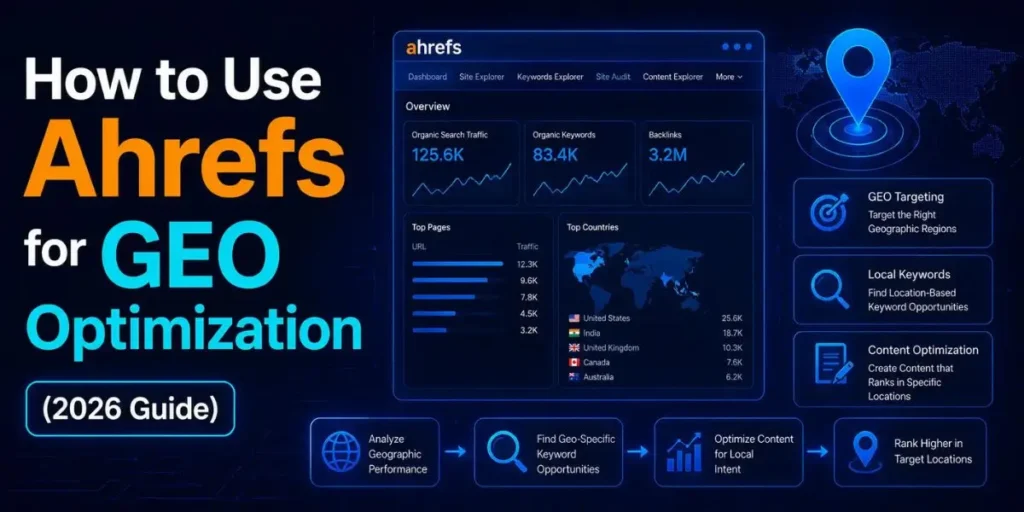
To use Ahrefs for GEO optimization, run Brand Radar to find AI citation gaps, map query fan-out in Keywords Explorer, grade passage coverage with AI Content Helper, and mine Reddit and YouTube citation sources through Site Explorer. The goal shifts from ranking pages to getting cited inside AI answers.
Most SEO tools were built for a world of blue links. Generative Engine Optimization (GEO) completely changes the target. Instead of fighting for a top-10 spot, you are fighting to be the source an AI quotes.
And here is the part that catches people off guard: Ahrefs, a tool most of us still think of as a backlink checker, has quietly become one of the most practical platforms for GEO optimization in 2026.
So if you already pay for Ahrefs, you probably do not need a separate AI visibility tool to get started. You just need to use the reports you already have differently.
Table Of Contents
ToggleWhat Is GEO, and Why Does Ahrefs Matter for It?
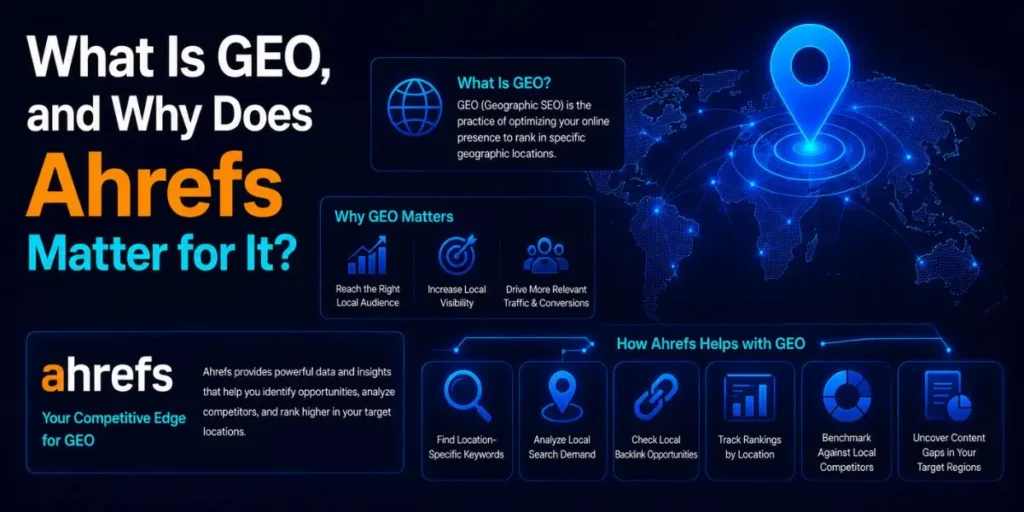
GEO is the practice of structuring content so that generative engines select, cite, and summarize it in AI-generated answers, rather than just ranking it on a results page. Think ChatGPT, Google AI Overviews, Perplexity, and Gemini.
Traditional SEO competes for clicks. GEO competes for citations. That is the whole shift in one line.
Ahrefs matters here because GEO still rests on an SEO foundation, and Ahrefs owns the data layer that foundation needs.
Brand mentions, organic authority, topic coverage, and the surfaces AI engines actually pull from all live inside reports you can open today.
In My Experience
Honestly, when I first tried treating Ahrefs as a GEO tool, I expected to bolt on a separate AI tracker within a week. I did not.
The Site Explorer mentions data, plus Brand Radar, covered most of what I needed for AI Overviews and ChatGPT.
The one thing it couldn’t show me was Claude or Grok visibility, which I will come back to later because it bit me in a client report.
Which Ahrefs Tool Should You Use for Each GEO Goal?
| GEO Goal | Best Ahrefs Tool | What It Shows You |
|---|---|---|
| Find AI citation gaps | Brand Radar | Prompts where rivals are cited and you are not |
| Plan passage-level content | AI Content Helper | Subtopic coverage and likely-extracted sentences |
| Map query fan-out | Keywords Explorer | Related questions and sub-queries to cover |
| Find citation surfaces | Site Explorer | High-traffic Reddit and YouTube threads to target |
| Measure AI visibility | Brand Radar | Share of voice trend across AI platforms |
Can Ahrefs Actually Do GEO Optimization in 2026?
Yes. Ahrefs built three GEO-relevant systems into the platform, each solving a different part of the AI visibility problem.
- Brand Radar tracks how often your brand appears across Google AI Overviews, ChatGPT, and Perplexity, plus YouTube and Reddit mentions that feed those engines.
- AI Content Helper grades your draft against top-ranking pages, detects multiple search intents behind one keyword, and color-codes sentences by subtopic so you can see which passages are likely to surface in AI answers.
- Site Explorer and Keywords Explorer expose the organic authority and sub-query map that decides whether an AI engine trusts you as a source.
But there is a cost reality nobody puts in their headline. Brand Radar launched as a free beta included with every Ahrefs plan. That phase is over.
As of early 2026, it is a paid add-on layered on top of the base subscription, which starts around $129 per month, with AI index bundles running far higher. Plenty of older guides still describe it as free. It is not.
How Do You Use Ahrefs for GEO Optimization?
- Open Brand Radar and filter for topics where competitors appear, but you do not. This is the fastest GEO win in the whole platform.
You instantly see the AI prompts where rivals get cited, and you are invisible, which becomes your content roadmap.
- Map the query fan-out in Keywords Explorer. Enter your main keyword, then study the related terms and questions.
AI Overviews now pull sources from sub-queries, not just the exact query, so each related question is a separate door into the answer.
- Draft inside the AI Content Helper and watch the color coding. Sentences tied to covered subtopics get marked, gaps stay blank. You are literally writing toward the passages an engine is likely to extract.
- Mine Reddit and YouTube in Site Explorer. Enter reddit.com, open Organic keywords, filter to positions 1 to 10, and find high-traffic threads in your niche.
These surfaces feed AI citations heavily, and YouTube is one of ChatGPT’s most-cited domains.
- Track your AI share of voice over time in Brand Radar. GEO has no keyword rank to check. Instead, you watch how often your brand shows up in AI responses and whether that share climbs week over week.
Notice the order matters here. You find the gap before you write, not after. Skipping straight to drafting is how people produce content that no engine ever asked for.
In My Experience
The thing that surprised me most was how much the Reddit step pulled its weight. I assumed my own site would be the main source of brand mentions. Wrong.
Most of the citations traced back to third-party threads and answers, exactly like the Ahrefs data predicted.
After I started seeding genuinely useful replies in high-traffic threads, the brand started showing up in AI answers I had not even targeted directly.
The Data Shift Most Ahrefs GEO Guides Missed
Here is the insight almost every competing article gets wrong because they have not updated their numbers.
In mid-2025, an Ahrefs study of 1.9 million citations found that 76% of pages cited in Google AI Overviews also ranked in the top 10 for the same query.
That single stat shaped a year of GEO advice. The takeaway everyone repeated was simple: rank in the top 10 and the AI will cite you.
But in early 2026, Ahrefs reran the analysis across 863,000 keywords and 4 million AI Overview URLs. The overlap collapsed to 38%. A separate BrightEdge study put it closer to 17%.
Read that again. More than 6 in 10 AI Overview citations now come from pages that do not rank in the top 10 for the query at all. Roughly a third come entirely from pages outside the top 100.
What changed? Query fan-out. When someone searches, Google splits the query into many sub-queries, then favors pages that appear across those related searches.
A page sitting at position 40 for a sub-query can get cited in an Overview; it never ranked directly.
So the practical instruction flips. Stop optimizing a single page for a single keyword. Use Ahrefs Keywords Explorer to optimize a content cluster across an entire question journey.
That is the gap most guides published in 2025 simply cannot see, because they froze on the old 76% number.
In My Experience
I ran into this directly on a client audit. We had a page ranking position 6 that was getting zero AI citations, while a thinner competitor at position 30 kept showing up in Overviews. It made no sense under the old model.
Once I mapped their sub-query coverage in Ahrefs, the answer was obvious. They covered the fan-out. We did not.
What Are the Common Pitfalls of Ahrefs GEO?
A few mistakes keep showing up, and most stem from old habits, not bad intent.
- Treating Brand Radar as complete coverage. It tracks Google AI Overviews, ChatGPT, and Perplexity well, but it misses Claude, Grok, Meta AI, and DeepSeek. If your audience lives on those, you have a blind spot.
- Trusting raw mention counts blindly. Independent reviews have flagged accuracy gaps in Brand Radar’s ChatGPT counts. Use it for trend direction, not as a perfect census.
- Optimizing one page for one keyword. This was fine in 2024. With fan-out driving citations, most of your visibility is now left on the table.
- Ignoring third-party surfaces. Your own site is rarely the primary source of citations. Skipping Reddit and YouTube research means skipping the sources of the citations.
- Writing dense paragraphs. AI engines extract clean, modular passages. Stat-backed bullets, short definitions, and tables get pulled far more than walls of text.
Why do these happen? Mostly because GEO looks like SEO, so people apply SEO reflexes to a game with different rules.
Realistic GEO Workflow Example With Ahrefs
Let me walk through one full flow, the way it actually runs.
Input: A blog targeting the topic “best AI writing tools for small businesses.”
Process:
- Open Brand Radar, filter to prompts in the AI writing niche where competitors are cited and the brand is not. Three clear gaps appear.
- Drop the seed keyword into Keywords Explorer, pull 12 related sub-questions covering price, use case, and comparison angles.
- Draft the article inside AI Content Helper, writing until the subtopic color coding shows full coverage of all 12 angles.
- In Site Explorer, find two high-traffic Reddit threads on AI writing tools and add genuinely useful answers linking to the new resource.
Output: A single cluster page that answers the full question journey, plus two seeded third-party mentions.
Result: Over the following weeks, Brand Radar’s share of voice for that topic climbs, and the page starts surfacing in AI Overviews triggered by sub-queries it does not even rank for directly.
That is the difference between a page built for one keyword and a resource built for an answer engine.
Pro Tips for Better GEO Results in Ahrefs
Worth knowing before you start: AI Content Helper detects multiple intents behind a single keyword.
When a topic mixes intents, pick the one you want to own and let the tool guide the structure around it, rather than trying to serve all of them in one muddled draft.
One trick that saved me hours: pair Brand Radar’s gap view with Keywords Explorer in the same session. The gap tells you what AI wants. The fan-out tells you how to fully cover it. Used together, you skip most of the guesswork.
And do not over-invest in schema for GEO alone. Ahrefs’ own controlled testing found that schema markup did not change citation counts for pages that were already heavily cited.
Add it for traditional SEO hygiene, not as a magic GEO lever.
Final Thoughts
GEO is not a replacement for SEO. It is SEO with a new finish line, and Ahrefs gives you the data to reach it without bolting on five more tools.
Start with the citation gaps, cover the fan-out, write extractable passages, and watch the share of voice instead of the rank.
The brands with the most AI visibility in 2026 are not the ones with the most keywords. They are the ones AI engines trust enough to quote.
Frequently Asked Questions
Yes. Ahrefs offers Brand Radar for AI citation tracking, AI Content Helper for passage coverage, and Site Explorer for finding citation surfaces, covering most GEO needs for Google AI Overviews, ChatGPT, and Perplexity.
No. Brand Radar began as a free beta but became a paid add-on in early 2026, layered on top of the base Ahrefs subscription that starts around $129 per month.
No. By early 2026, only about 38% of AI Overview citations came from top-10 pages, down from 76% in 2025. Query fan-out now pulls sources from many sub-queries.
Brand Radar tracks Google AI Overviews, ChatGPT, and Perplexity, plus Reddit and YouTube mentions. It does not currently cover Claude, Grok, Meta AI, or DeepSeek.
You track AI share of voice in Brand Radar instead of keyword rankings. It shows how often your brand appears in AI answers and whether that visibility trends up over time.

Is an SEO Specialist and AI Tools Researcher with over 4 years of hands-on experience in search engine optimization. As the founder of Smart AI Helper Pro, he tests and reviews AI writing, SEO, and marketing tools to help creators and business owners grow faster with practical, research-backed strategies.